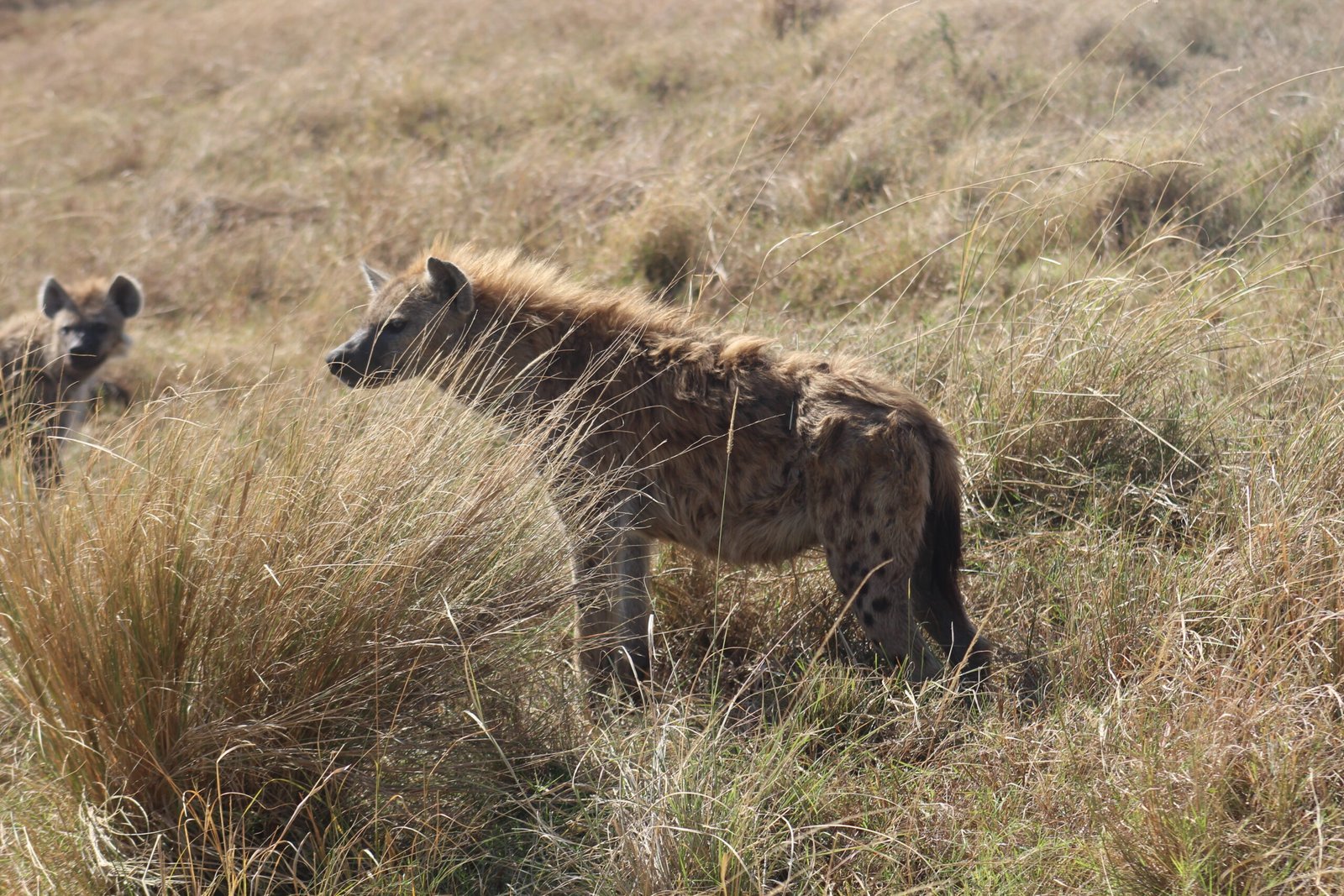
No predator on the African savanna is more misunderstood than the spotted hyena. Popular culture has painted it as a cowardly scavenger, a thief lurking in the shadows of lions, a creature unworthy of the reverence we reserve for the “majestic” big cats.
The truth is far more interesting. The spotted hyena is one of Africa’s most successful predators, a social genius, and an ecological keystone whose presence — or absence — ripples through the entire savanna ecosystem.
The Scavenger Myth
Let’s start with the most persistent misconception. Spotted hyenas are not primarily scavengers. They are hunters — highly effective ones.
Long-term studies across Africa have consistently shown that hyenas kill the vast majority of what they eat. In Kenya’s Maasai Mara, one study found that a single clan obtained all but 5% of its meat from hunting, making them “among the most predatory hyenas ever seen”. Even in ecosystems where scavenging is more common, hunting remains their primary strategy.
And they are good at it. Hyenas hunt alone when targeting small prey, but when they work together, their success rate can reach 50–90%. They chase prey to exhaustion, using stamina rather than speed as their weapon, and once they bring down an animal, they consume almost every ounce of it — including the bones, which their powerful jaws crush with ease.
This makes them the ultimate zero-waste predator, cleaning the savanna in ways that lions and cheetahs never do.
The Vacuum Cleaners of the Savanna
If hyenas are underrated as hunters, they are almost revered as scavengers — and for good reason. They are the sanitation crew of the African bush, the cleanup team that keeps the ecosystem running.
A hyena’s digestive system is extraordinary. Their stomach acid is strong enough to neutralize pathogens that would sicken or kill other animals. They consume skin, hooves, horns, and bones — parts that most predators leave behind. A pack of hyenas can reduce a zebra carcass to almost nothing within hours.
But their most important service is what they do with diseased carcasses. When anthrax, botulism, or other infectious diseases kill livestock or wildlife, hyenas move in. Their powerful immune systems allow them to consume contaminated meat without falling ill, and by doing so, they remove the source of infection from the landscape. Without hyenas, those carcasses would rot in the open, exposing other animals — and potentially humans — to deadly pathogens.
This is not a small contribution. In areas where vultures and hyenas have declined, disease outbreaks among wildlife and livestock have increased. Hyenas are, quite literally, the vacuum cleaners of the savanna — clearing away death so that life can continue.
The Ecology of Fear
The most important role hyenas play is one you cannot see directly. It is the role of fear.
Every herbivore on the savanna must balance two things: finding the most nutritious food, and avoiding being eaten. If predators are absent, that balance tips. Animals graze freely in areas they would normally avoid, overexploiting vegetation and altering the landscape.
Scientists observed this firsthand in Mozambique’s Gorongosa National Park, where decades of civil war eliminated hyenas, leopards, and wild dogs. Without these predators, bushbuck — normally shy, forest-dwelling antelopes — expanded onto the open plains, browsing heavily on vegetation they would never have touched under normal circumstances.
When researchers played recordings of leopard calls and placed artificial predator scat in those areas, the bushbuck retreated immediately. The fear alone — without any actual killing — was enough to restore their behavior. This is what ecologists call a “trophic cascade”: predators shape the behavior of herbivores, which in turn shapes the plant life, which shapes everything else.
Hyenas are a critical part of that chain of fear. Their presence keeps herbivores moving, prevents overgrazing, and maintains the balance between open grassland and woodland that defines the savanna.
A Society Unlike Any Other
Spotted hyenas live in clans that can number up to 80 individuals, and these clans are run by females. This is extraordinary among large carnivores. The alpha female sits at the top of the hierarchy, and her daughters inherit her rank. Every adult female outranks every adult male.
Males, by contrast, leave their birth clans when they reach maturity and must join a new clan as the lowest-ranking member, begging for acceptance and navigating a complex social world where they start at the very bottom. It is a matriarchal society built on coalitions, kinship, and political maneuvering — one that scientists have compared to the social intelligence of primates.
Hyenas are also remarkably vocal. They whoop, grunt, giggle, and groan, using different calls to coordinate hunts, assert rank, and locate clan members separated across the landscape. Their famous “laugh” — the giggle — is not a sign of amusement but of nervousness or submission, and its pitch reveals the individual’s age and social standing.
The Lion Problem
No conversation about hyenas is complete without addressing lions. The two species are locked in an ancient rivalry that spans millennia.
Lions steal hyena kills; hyenas steal lion kills. Hyenas lose anywhere from 5% to 20% of their food to lions, but they also scavenge from lion kills when they can. In some ecosystems, the relationship is more complex than simple competition — hyenas may actually benefit from following lions, because lions are better at finding large carcasses.
The dynamic shifts depending on conditions. When prey is abundant, hyenas can afford to compete with lions. When prey is scarce, the tension intensifies. In extreme cases, high hyena numbers can even suppress lion populations, though the opposite is more commonly observed.
This rivalry is not just dramatic — it is ecologically important. By competing with lions, hyenas prevent any single predator from dominating the ecosystem. They keep the balance of power in check.
A Species in Decline
Despite their ecological importance, spotted hyenas are facing mounting threats.
There are fewer than 50,000 spotted hyenas left across Africa, and populations are declining outside protected areas. The causes are depressingly familiar: persecution fueled by fear and misinformation, habitat loss, human-wildlife conflict, and accidental deaths from snares and poisoning.
Hyenas are often killed in retaliation for livestock predation — sometimes deservedly, sometimes not. Farmers may blame hyenas for kills they did not make, or kill them preventatively. In Tanzania, snares set for bushmeat kill around 400 adult hyenas each year.
The irony is that hyenas are actually the least expensive large predator to live alongside. Research in Kenya’s Laikipia District found that annual hyena predation on livestock cost ranchers approximately $1.24 per head of cattle — a fraction of the costs associated with other predators.
Why It Matters
The African savanna is not a collection of independent species. It is a web, and every strand matters. Remove the hyena, and the web weakens.
Hyenas regulate herbivore populations. They clean the landscape of carcasses that could spread disease. They return nutrients to the soil. Through the fear they inspire, they keep herbivores moving, preventing overgrazing and maintaining the balance between grassland and woodland. And through their competition with lions, they keep the entire predator guild in check.
They are not the villains of the savanna. They are the architects of its balance.
The next time you see a spotted hyena on a game drive, look past the hunched shoulders and the haunting call. You are looking at one of Africa’s most successful predators, a social genius, and a species whose fate is intertwined with the health of the entire ecosystem.
They have earned far more respect than they receive.
For travelers interested in witnessing the complex social lives of spotted hyenas firsthand, Kenya’s Maasai Mara, Amboseli, and Laikipia regions offer exceptional opportunities. Contact Hal Safari to plan your journey.