The Congo River is the deepest river in the world. It is also one of the most formidable barriers in Africa. For millions of years, it has divided the rainforests of the Congo Basin into two distinct worlds — and in doing so, it has shaped the evolutionary history of our closest living relatives.
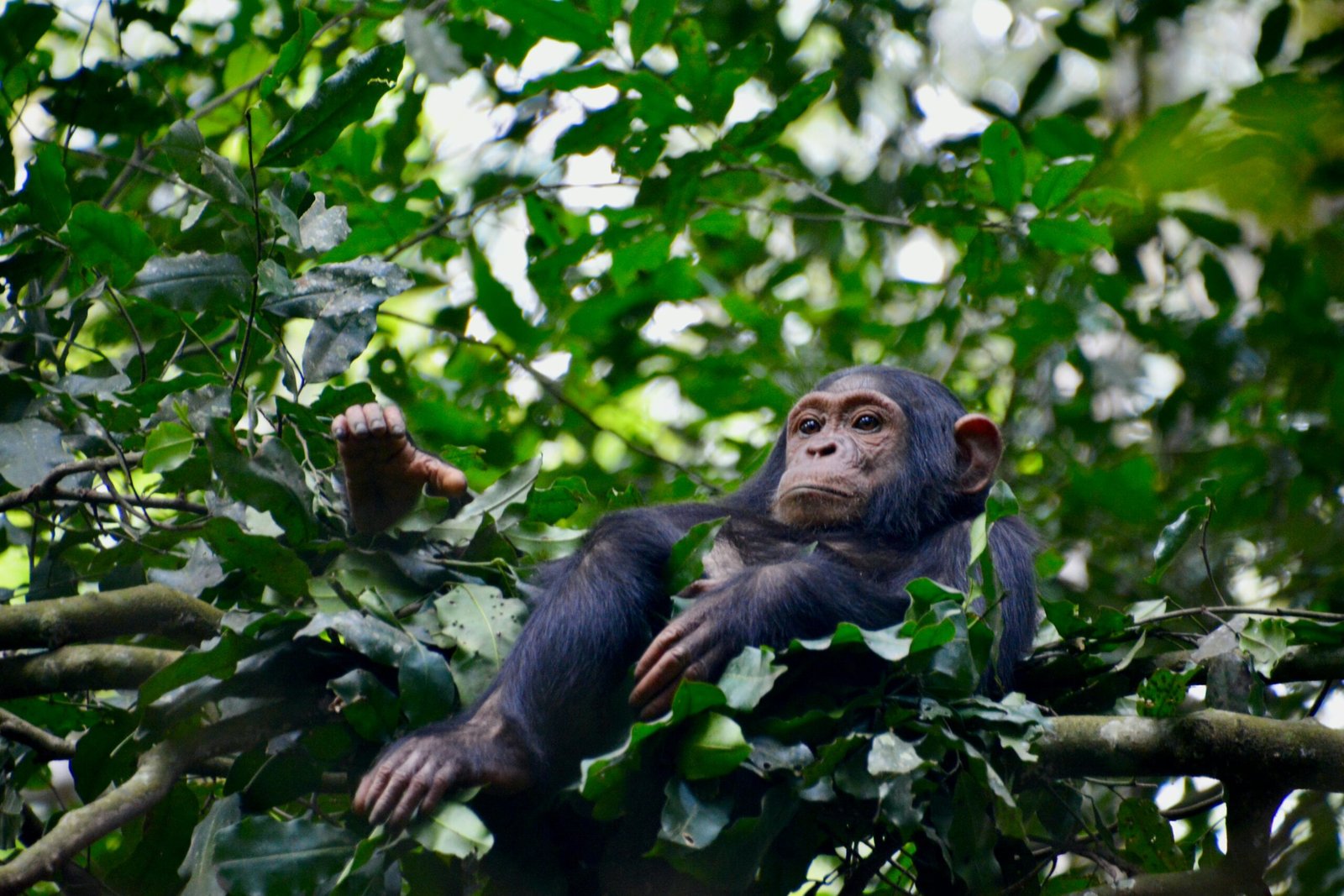
On the north bank lives the chimpanzee. On the south bank lives the bonobo. They are separated by a river that neither species crosses.
Two Species, One Ancestor
Chimpanzees and bonobos share a common ancestor. Genetic studies suggest they diverged roughly one to two million years ago. For decades, scientists assumed the Congo River formed during that same period, cutting the ancestral population in two.
But recent geological research has overturned that assumption.
The River Is Far Older Than We Thought
The Congo River has existed in something close to its current form for approximately 34 million years — older than the split between humans and chimpanzees, older than almost every major branching event in the African great ape family tree.
This changes everything. If the river has been a barrier for 34 million years, then the ancestors of bonobos and chimpanzees could not have been separated by its formation. They must have already been living on one side — almost certainly the north bank, where chimpanzees range today.
So how did bonobos end up on the south bank?
Crossing the River
The answer, according to researchers at Kyoto University, is that bonobos descend from a small group of chimpanzee ancestors who crossed the Congo during a period of extreme drought.
During the Pleistocene epoch, Africa experienced severe arid periods. The Congo’s water levels dropped dramatically. At certain points, the river may have become shallow enough to wade across.
A small population crossed to the south bank. They found themselves isolated. Over hundreds of thousands of years, they evolved into something new.
They became bonobos.
A Bottleneck That Shaped a Species
The founding population was small, and this matters enormously for evolution. When a small group becomes isolated, its genetic diversity is limited. Random genetic drift can amplify traits that would otherwise remain rare.
The consequences for bonobo evolution may have been profound. Bonobos are strikingly different from chimpanzees — generally more peaceful, with females holding higher social status and aggression between groups being rare.
Scientists have long debated why. The bottleneck hypothesis suggests the traits that define bonobos today may not be adaptations to environment at all. They may simply be the result of a small founding population, isolated by geography, evolving along a path determined as much by chance as by natural selection.
A Barrier That Still Holds
The Congo River remains an absolute barrier today. Bonobos are found only in the Democratic Republic of Congo, south of the river and north of the Kasai River. They are the only great ape species found exclusively in one country.
And yet, the barrier is not completely impermeable. A 2016 genomic study revealed that chimpanzees and bonobos interbred at least twice after their initial separation. Central and eastern chimpanzee populations carry genetic traces of these ancient hybridization events.
The river, while powerful, was not always impassable.
What the River Teaches Us
The story of bonobos and chimpanzees is a reminder that evolution is not always about gradual adaptation to environment. Sometimes it is about geography — rivers and forests and the accidents of history.
The Congo River did not create the split between bonobos and chimpanzees. It was already there, already ancient, when a small group of apes crossed it during a moment of climatic stress. That crossing, and the isolation that followed, set bonobos on a unique evolutionary trajectory.
Today, bonobos are endangered. Their range is limited. Their population is small. They exist only in a single country, on one side of one river. Their entire evolutionary story is tied to a landscape now under pressure from deforestation, hunting, and agriculture.
The river that made them could also be the river that confines them.
See Our Closest Relatives in the Wild
While bonobos remain confined to the Congo Basin and are almost impossible to see in the wild, their chimpanzee cousins — and their larger gorilla relatives — can be encountered on unforgettable safaris in East Africa.
Hal Safari offers chimpanzee and gorilla safaris in Uganda and Rwanda, including:
- Uganda — Chimpanzee tracking in Kibale Forest and Queen Elizabeth National Park, plus gorilla trekking in Bwindi Impenetrable National Park and Mgahinga Gorilla National Park.
- Rwanda — Gorilla trekking in Volcanoes National Park, home to habituated mountain gorilla families, combined with chimpanzee experiences and cultural encounters.
These are among the most profound wildlife experiences on Earth — a chance to spend time in the presence of our closest living relatives, in the forests where they belong.
Contact Hal Safari to plan your Uganda or Rwanda primate safari.